
When the Foxes Are Getting Married.
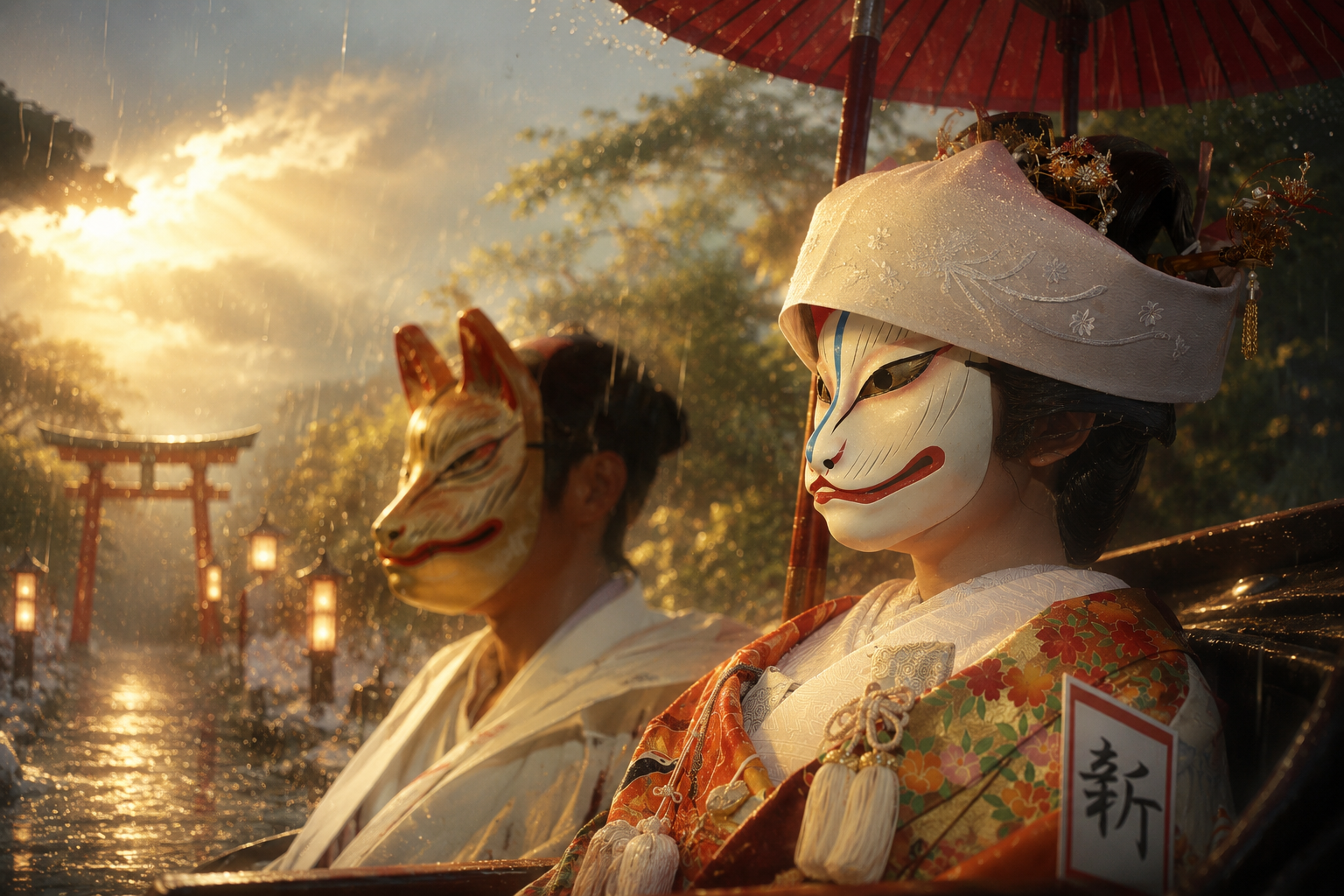
There are days when the sun is shining brightly, yet rain suddenly begins to fall.
No dark clouds.
No warning.
Just sunlight and rain, at the same time.
In Japan, this is called tenki-ame, or “sunny rain.”
But there is another, much more intriguing name for it:
the fox’s wedding.
Kitsune no yomeiri.
It sounds less like a weather phenomenon and more like the beginning of a folktale.
And, in fact, it is.
A Wedding You Cannot See
The expression kitsune no yomeiri has two very different meanings in Japanese folklore.
The first is the one we might encounter on a summer or early-autumn day: rain falling while the sun is still shining.
The second is far more mysterious.
Long ago, people sometimes reported seeing strange lights stretching through the darkness of the countryside—one after another, like lanterns carried in a wedding procession.
These were known as kitsune-bi, or “fox fires.”
Before modern wedding halls became commonplace, Japanese weddings were often held in the evening. A bride might be accompanied to her new home in a procession lit by paper lanterns.
So when a distant line of mysterious lights appeared in the night, it was easy to imagine a wedding procession.
But there was one problem.
There was no wedding.
Perhaps the foxes were having a wedding of their own.
Or perhaps, as foxes were traditionally believed to be clever creatures capable of deceiving humans, they were simply making us believe we had seen something that was never really there.
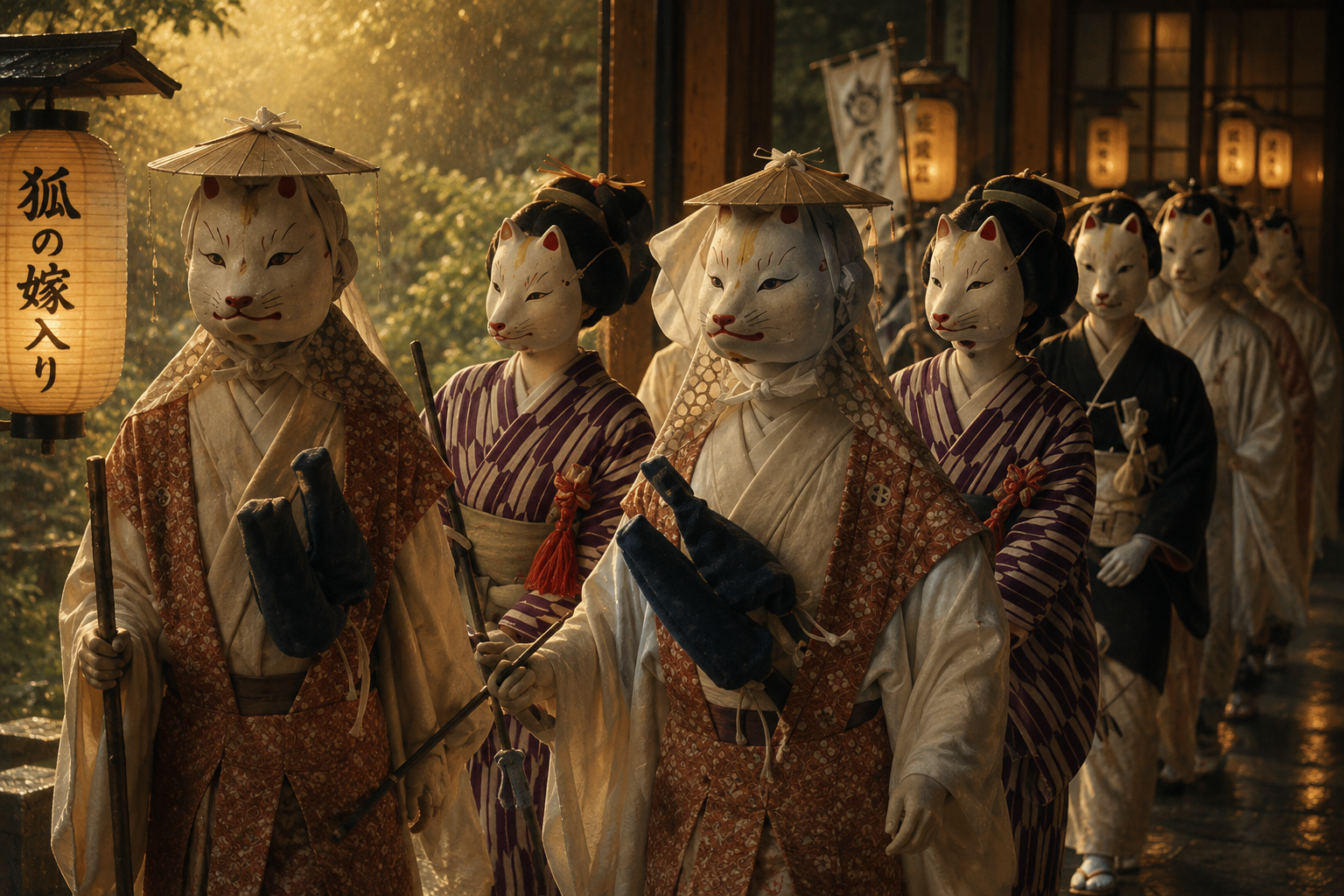
Foxes, Rain, and a Little Mystery
The same idea seems to have found its way into the weather.
Why would rain fall when the sun was shining?
Today, we can explain it quite simply. A small, localized shower can pass through while the sun continues to shine elsewhere. The rain may even be carried by wind from a nearby cloud.
But to people watching the sky centuries ago, it must have seemed wonderfully strange.
Some traditions imagined that the foxes were holding their wedding somewhere in the mountains, and that the rain helped keep their procession hidden.
In other places, the meaning was slightly different.
In Kumamoto, for example, a rainbow could be associated with the fox's wedding. In parts of Aichi, hail was said to signal one. Even the name itself changes from place to place: some regions call it kitsune-ame, “fox rain,” while others have expressions such as “the fox’s wedding feast.”
There was no single version of the story.
And perhaps that is part of its charm.
A Very Japanese Way of Seeing the Weather
Interestingly, kitsune no yomeiri is not only a story about something strange.
In some regions, fox fires were connected with farming and the harvest. In parts of Niigata and Nara, more fox fires were said to mean a good harvest, while fewer could foretell a poor one.
There were also old summer traditions in which people carried torches through the fields after planting, in an effort to protect crops from insects and disease. Some researchers have suggested that such lights may have been mistaken for the mysterious fox fires of legend.
So what began as something mysterious was not necessarily frightening.
It could also be connected with fields, harvests, and hopes for a good year.
A Name That Still Lives On
The expression is still familiar in Japan today, although not everyone uses it.
A survey conducted by Weathernews found that 44 percent of respondents across Japan used kitsune no yomeiri for sunny rain, while the figure rose to 83 percent in the Kansai region. The expression is particularly familiar in western Japan, where it remains part of everyday language and local memory.
That regional difference is rather fascinating.
The rain itself is the same.
But the story we attach to it can change depending on where we live.
So, Are the Foxes Getting Married?
There is, of course, nothing supernatural about sunny rain.
And yet, when summer begins to fade and the weather turns unpredictable, it is not unusual to find yourself standing in the sunshine while a brief shower passes overhead.
The scientific explanation is perfectly reasonable.
Still, I think there is something lovely about the old Japanese name.
Instead of simply saying,
“It is raining while the sun is shining,”
someone once imagined a hidden wedding procession somewhere beyond the hills.
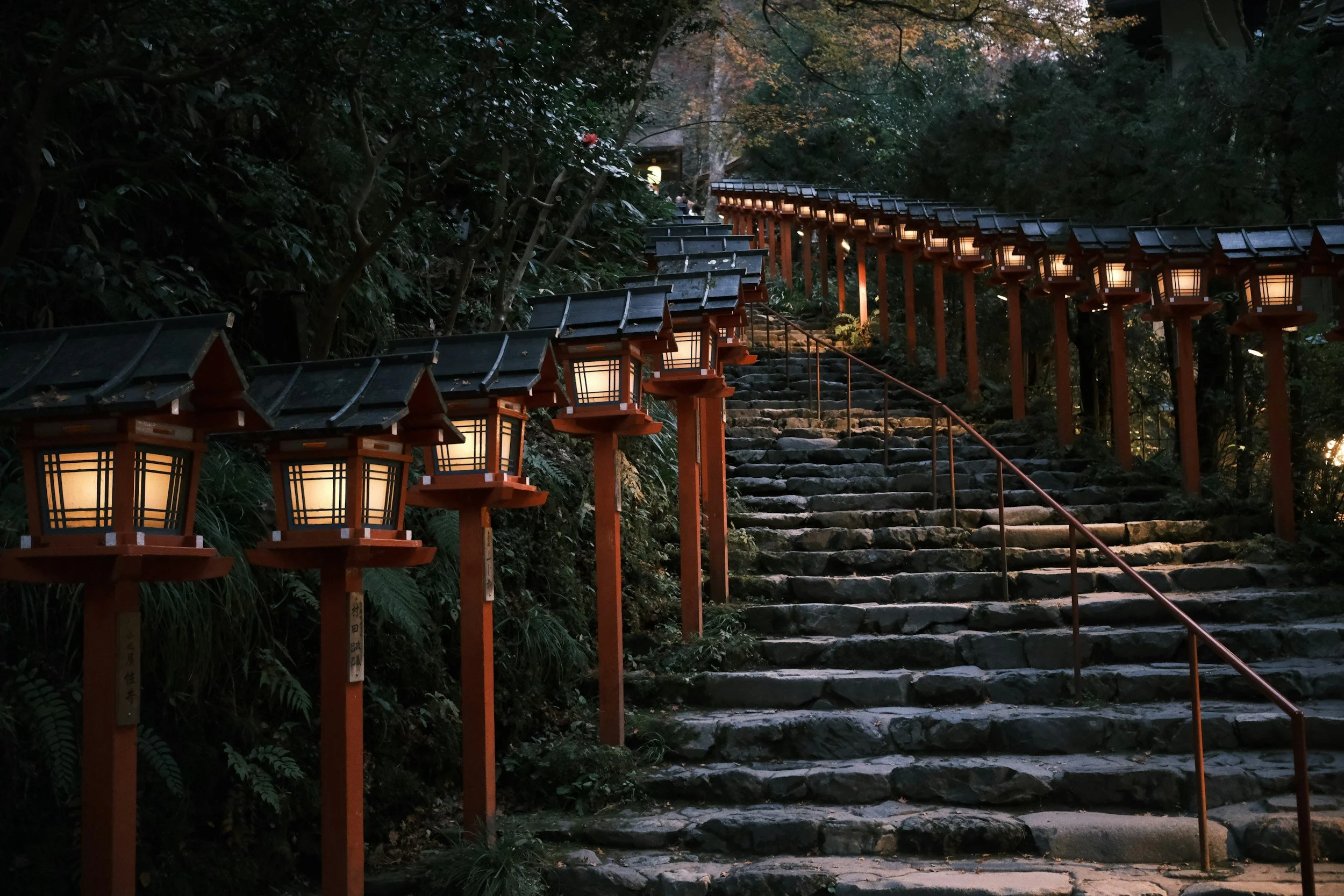
A few lanterns in the darkness became a fox's wedding.
A sudden shower beneath a bright sky became another sign that the foxes were celebrating.
Perhaps this is one of the quieter pleasures of folklore.
Nature does not always have to be explained.
Sometimes, it is given a story.
And the next time the sun is shining and rain begins to fall, I may look toward the hills for just a moment.
The foxes must be getting married somewhere.
