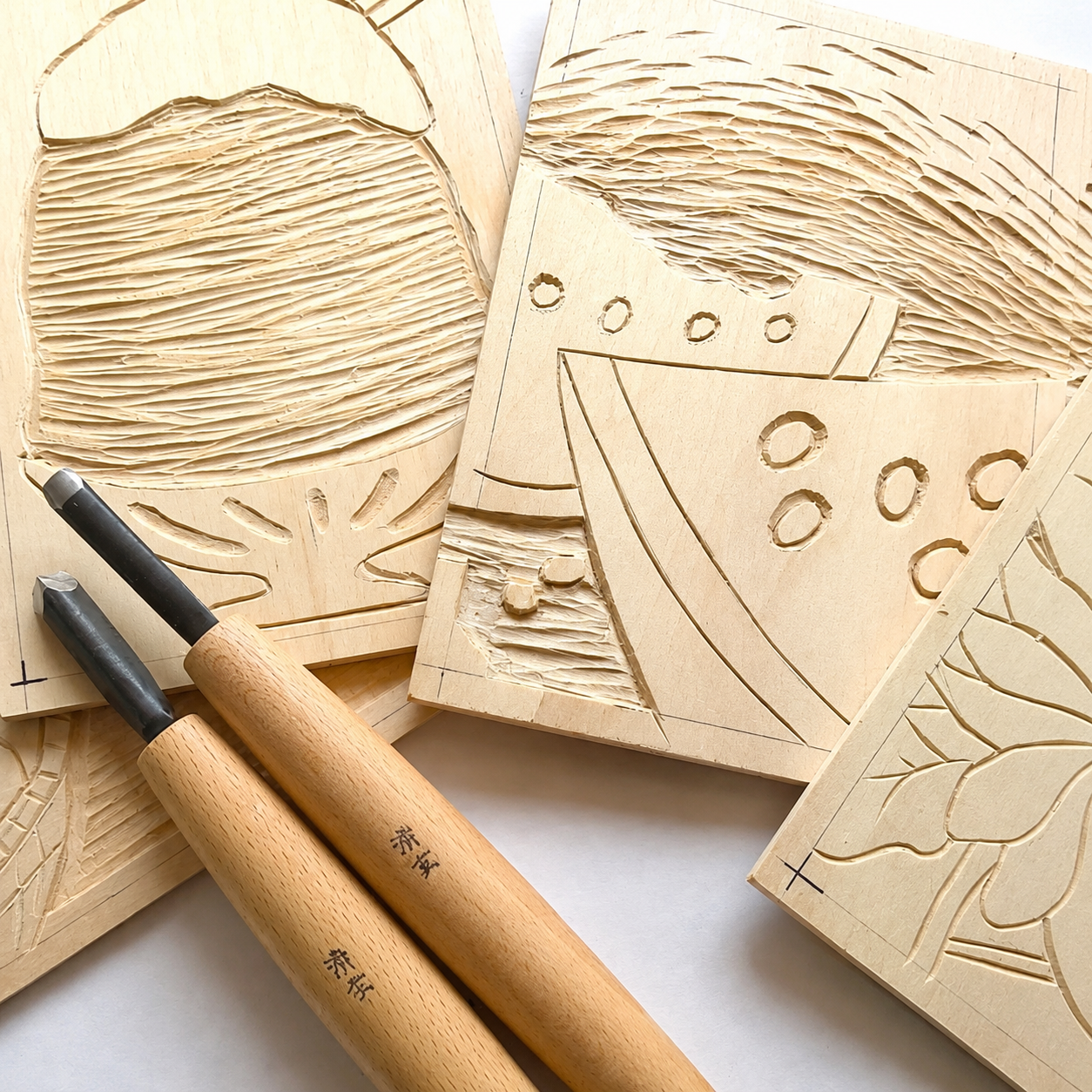
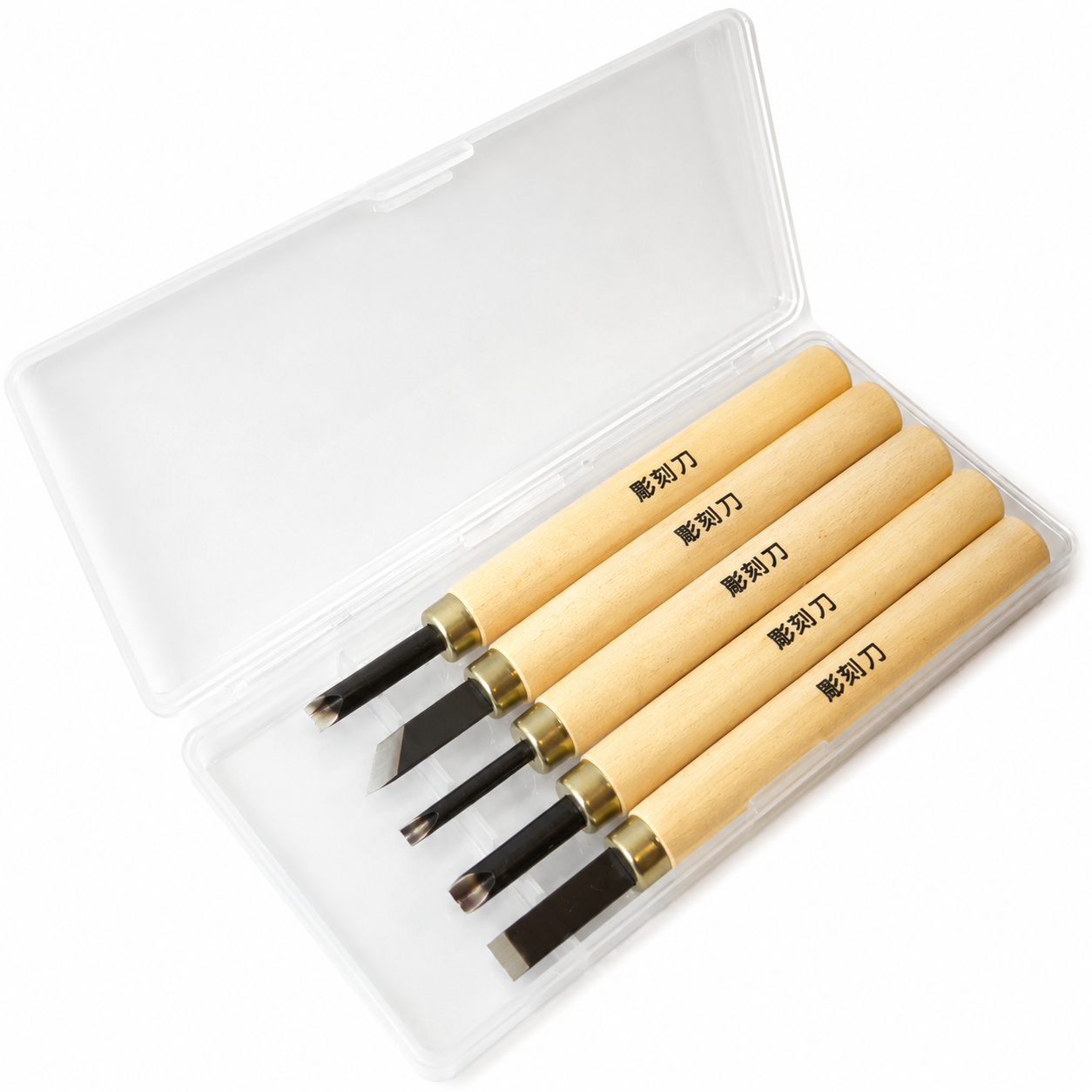
You draw a picture on a piece of wood, decide which parts to remove, and slowly carve your design into the surface. Some children are naturally good at it. Others struggle to make the wood look anything like what they had imagined.
I was probably somewhere in between.
Looking back, I remember using carving tools more often when I was a child than children seem to today. These days, the tools may only be used for a limited number of lessons before being put away.
So, did those few hours with a carving knife have anything to do with Japan’s craftsmanship?
Probably not in any direct or measurable way.
Japan’s traditional crafts are facing a very different challenge today. Many craft industries are struggling with fewer workers, an aging workforce, and a lack of successors. The skills themselves can take many years to learn, while the businesses that support them are becoming harder to sustain.
Still, I find it interesting to think about.
A child holding a carving tool for the first time is not becoming a craftsperson. But they are learning something else: how a tool feels in the hand, how much pressure to use, how material responds, and how an idea slowly becomes something real.
Perhaps that kind of experience stays with us in ways we don't always notice.
And perhaps that is one small part of the much bigger story behind the way Japan makes things.
A small tool. A piece of wood. A few hours at school.
Maybe that is where the story begins.