
PAWPAW
The American Fruit I Discovered in Japan
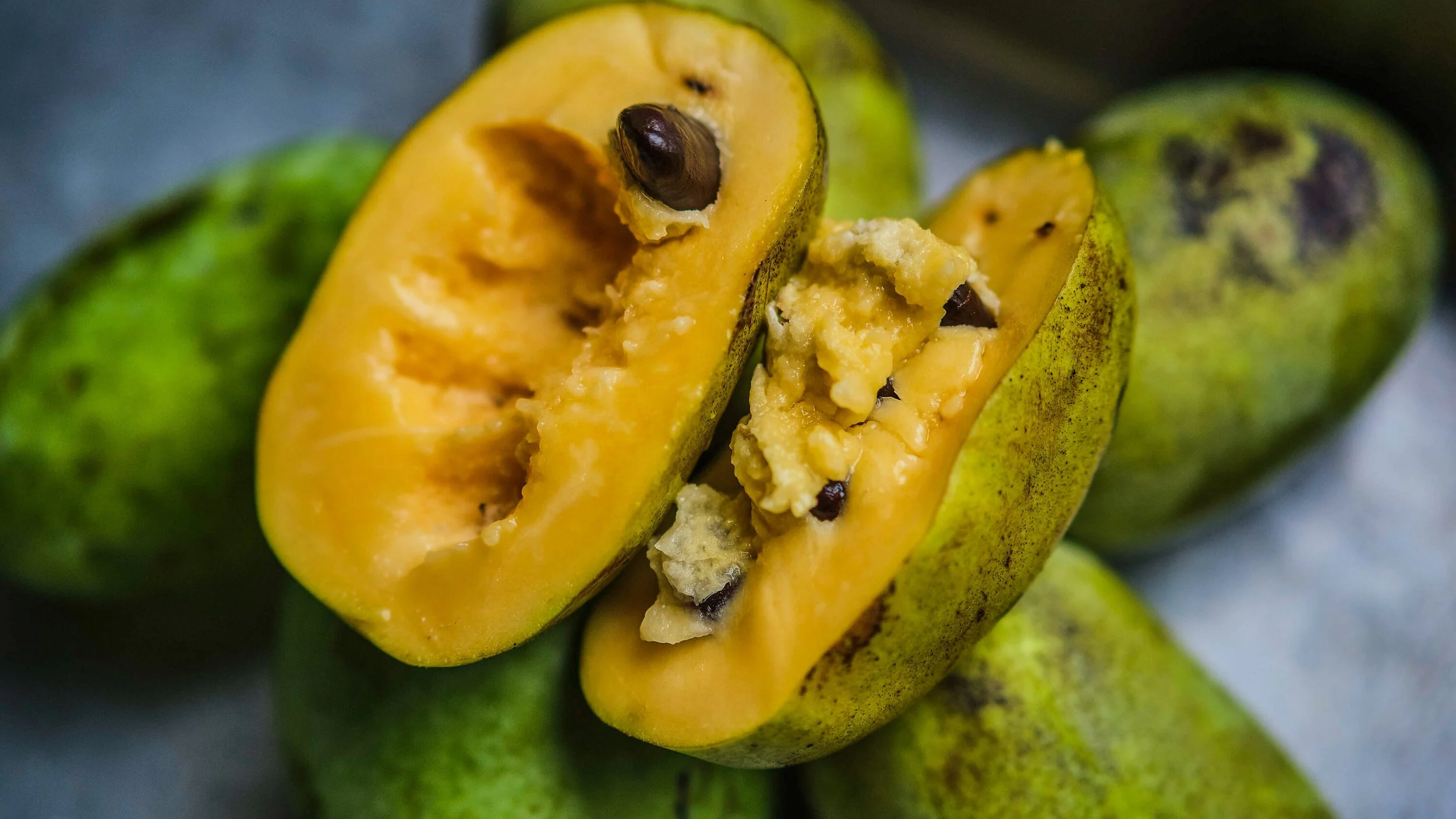
Pawpaw.
No, it isn't the sound a dog makes.
And it isn't the name of a cute stuffed character, either.
It is the name of a fruit.
In Japan, it is called popo (ポポー), and it is sometimes described as a maboroshi no kajitsu — a “phantom fruit,” something rarely seen in ordinary shops.
It also happens to be my favourite fruit.
And right now, in September, pawpaw season has arrived in Japan.
So what does it taste like?
The flesh is soft and creamy, with a texture somewhere between a ripe mango and a banana. The flavour is wonderfully sweet and mellow — so much so that it reminds me of custard cream.
It is the kind of fruit that makes you think, This must be tropical.
Except it isn't.
Pawpaw is native to North America.
A Fruit That Doesn't Travel Well
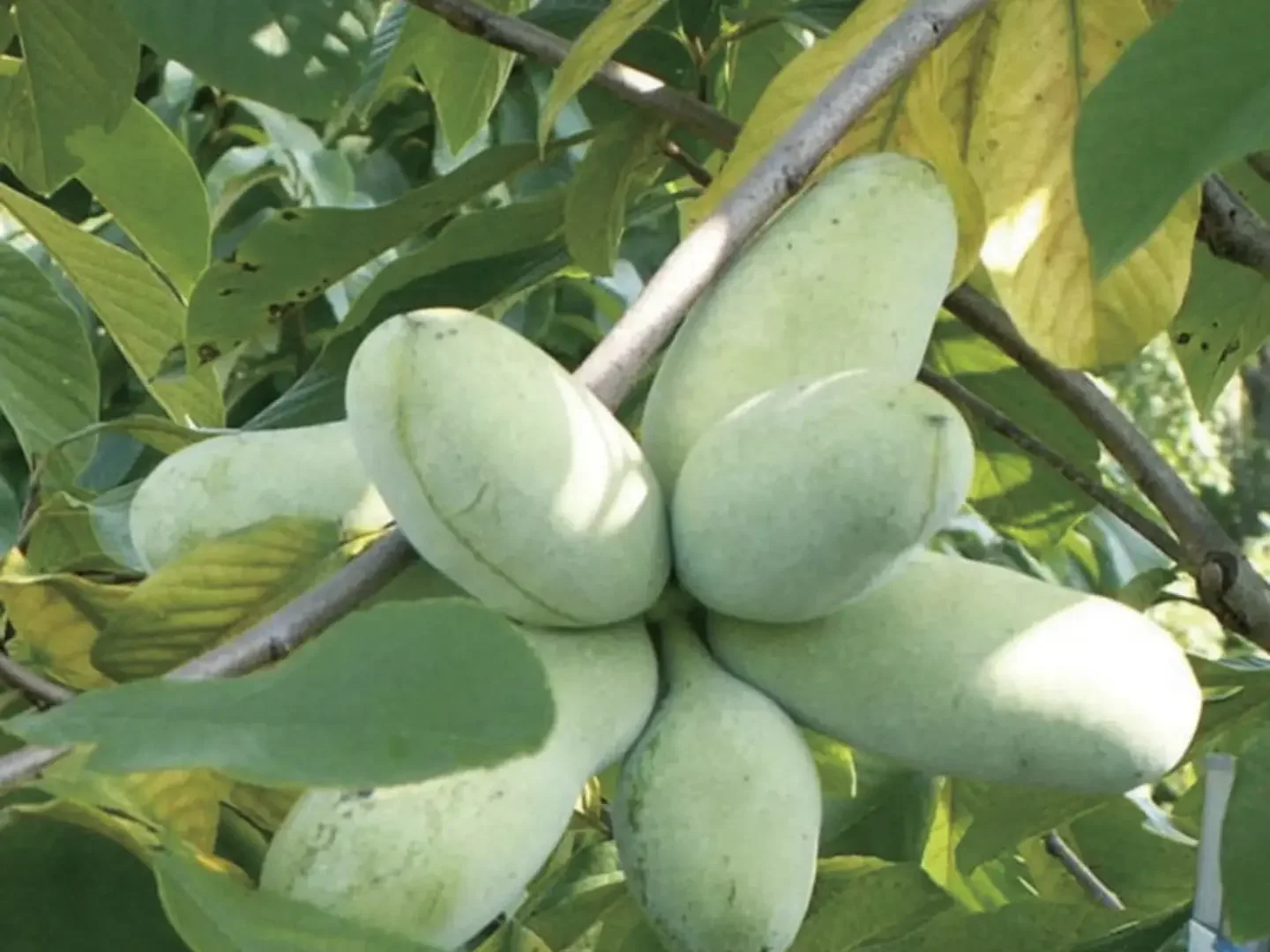
There is a reason pawpaw can be so difficult to find.
For all its sweetness, it is an incredibly delicate fruit.
As it ripens, the flesh becomes very soft. Even a small bump can bruise it, and once damaged, the fruit can spoil quickly.
That softness is one of pawpaw's biggest weaknesses.
It simply does not travel well.
And when a fruit is difficult to transport, it becomes difficult to put on supermarket shelves.
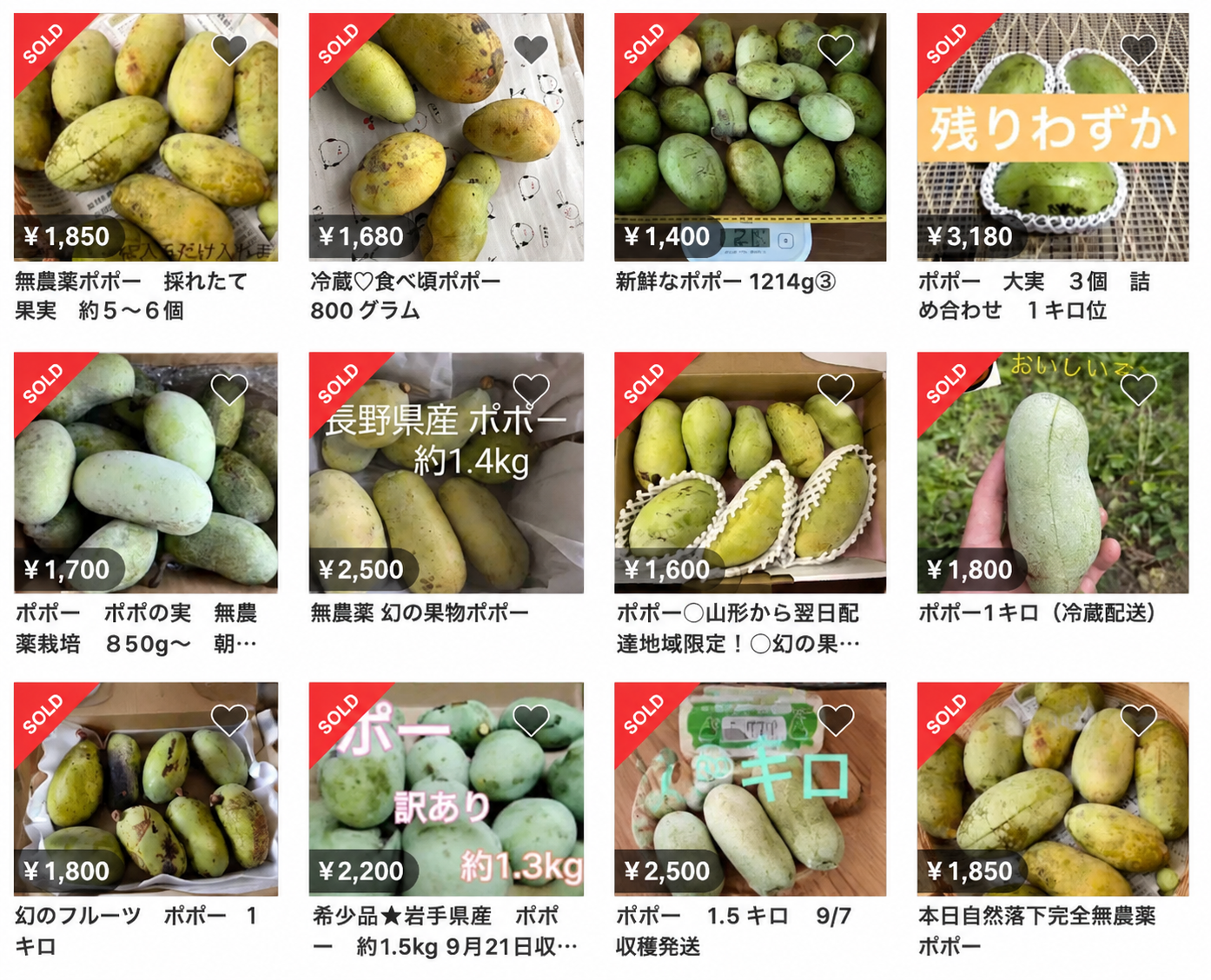
In Japan, pawpaw is therefore often sold much closer to where it is grown — directly by growers, at local markets, or through small-scale direct sales.
Even on Japanese online marketplaces, I often see pawpaw disappear almost as soon as it appears.
Perhaps that is part of the reason it has acquired its reputation as a “phantom fruit.”
It isn't impossible to find.
It simply doesn't travel very far.
A Tree with Its Own Defences
Pawpaw grows on a tree, and the tree has another rather unusual characteristic.
Its leaves, bark, twigs and seeds contain naturally occurring compounds that help protect the plant from being eaten. The leaves are generally unappealing to many insects, making the pawpaw tree relatively well protected from insect damage.
Of course, nature always has exceptions.
Some insects have evolved to feed on pawpaw leaves, including the caterpillar of the zebra swallowtail butterfly.
Still, it is rather fascinating to think that the tree protects itself in this way.
And then there is the flower.
Well...
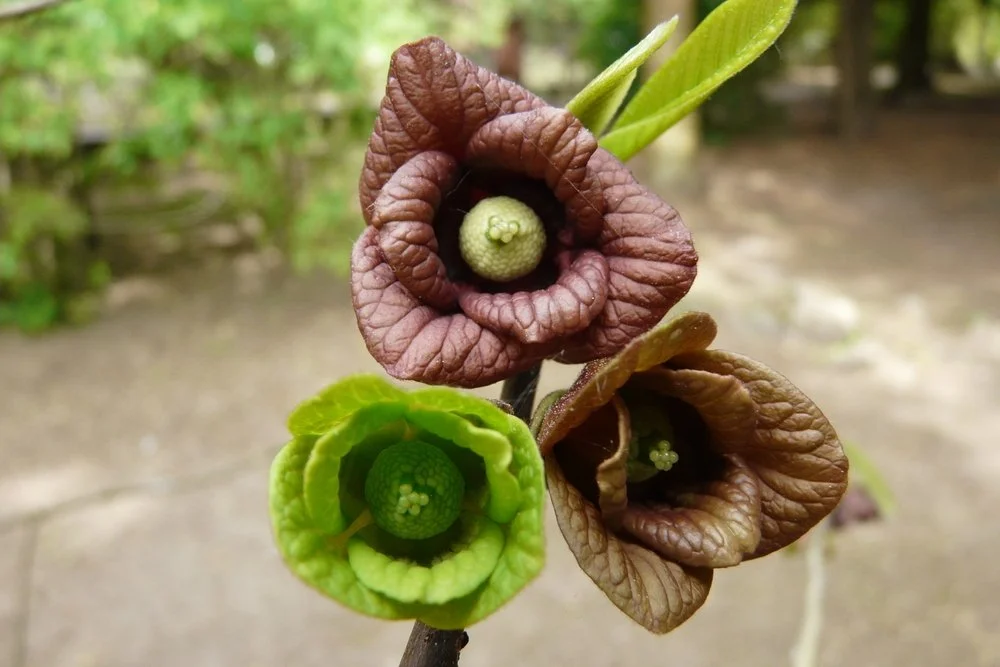
The flower is a little frightening.
Its dark reddish-purple colour and unusual shape make it look almost as though something is staring back at you.
It is certainly not the kind of flower I would have expected from a tree that produces such sweet, creamy fruit.
And no, the flower is not something you should eat.
How I Fell for Pawpaw
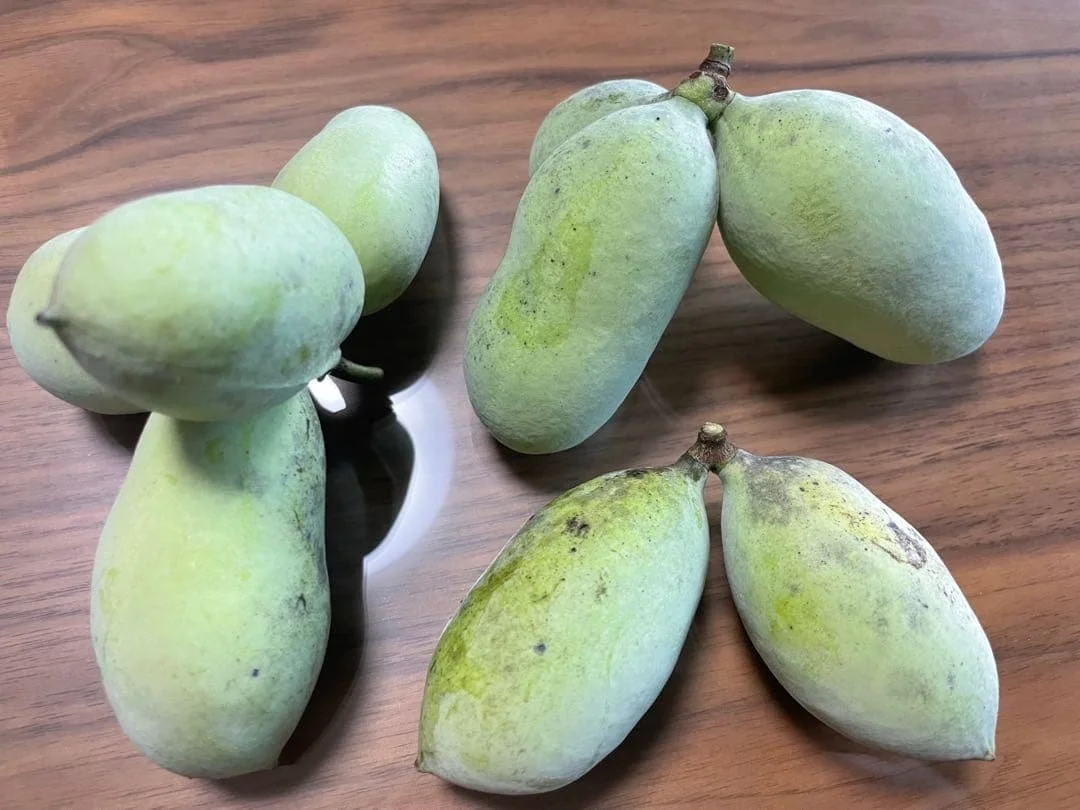
I first discovered pawpaw about four years ago.
Until then, I had never heard of it.
One day, a local grower happened to bring some to sell, and I bought one simply because I was curious.
That first taste was enough.
Since then, I have bought pawpaw every year.
The only problem is that I cannot always find it locally. I never know exactly when my local growers will have it, so I sometimes turn to one of Japan's best-known online flea-market sites instead.
And when pawpaw appears there, it often sells very quickly.
There seem to be quite a few people in Japan who have fallen for this unusual fruit, just as I have.
Not loudly.
Not everywhere.
But quietly, and surely.
So, How Do You Eat Yours?
This is the part that makes me curious about the people who live where pawpaw was born.
How do you eat it in North America?
Do you simply cut one open and eat the soft flesh as it is, as I do?
Or are there other favourite ways of enjoying it?
Perhaps you bake it into something, blend it into a dessert, or use it in a way I have never even imagined.
I would genuinely love to know.
So, if you are reading this from North America and you grew up with pawpaw, tell me how you eat yours.
Because there is something rather lovely about discovering that a fruit born in America has quietly found its own fans here in Japan.
I had never even heard of pawpaw four years ago.
Now, every September, I look forward to finding it again.
A little-known fruit from North America has somehow become one of my favourite signs that September has arrived.
And perhaps that is one of the pleasures of discovering something new:
sometimes, the most unexpected things have been quietly waiting for you all along.
↓ For those who want to go a little deeper into the world of pawpaw.
